
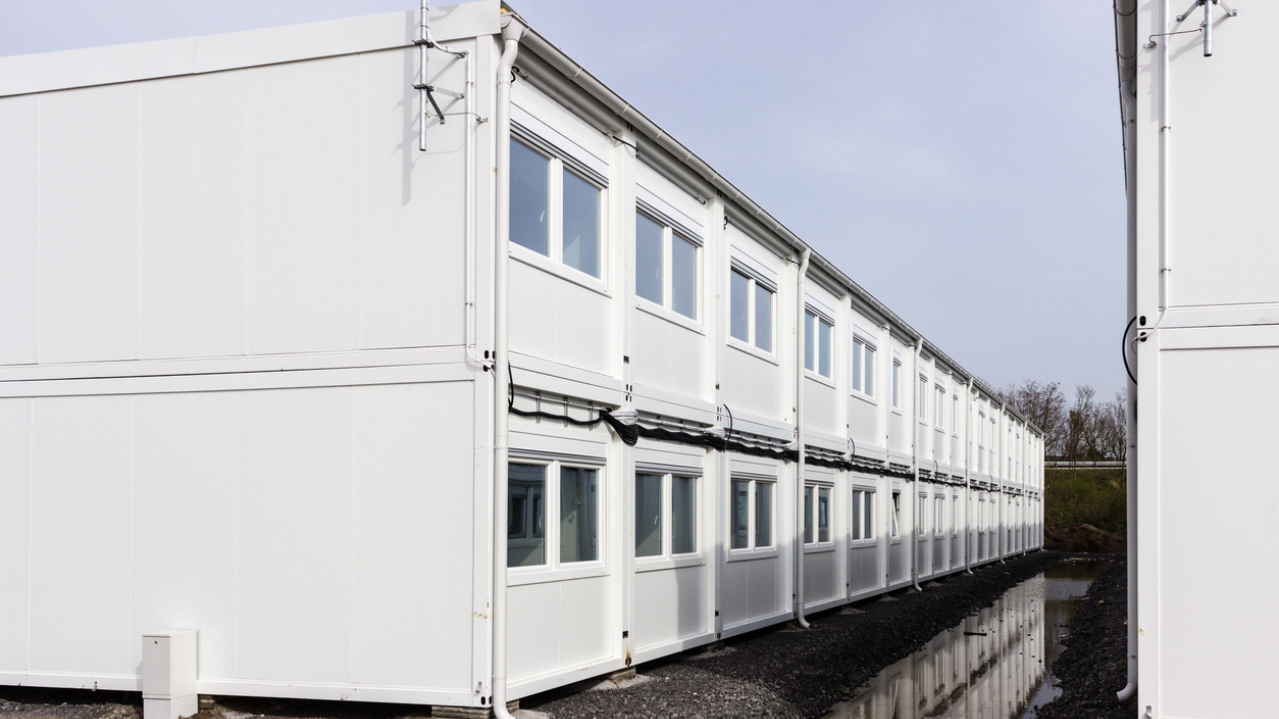
This briefing examines asylum accommodation in the UK. It provides statistics on the number of asylum seekers in each type of accommodation, and where they are accommodated across the UK.
-
Key Points
- The share of asylum seekers in hotels rose sharply after the pandemic, reaching 41% at the end of 2023, before falling to 21% by the end of March 2026. The drop reflects a shift into dispersal housing and reduced demand for asylum accommodation.
More… - While hotel use declined across much of the UK after 2023, it remained high in London, where 58% of accommodated asylum seekers were still living in hotels at the end of March 2026.
More… - The share of asylum seekers housed in London increased substantially in the late 2010s (3% in 2015 to 20% in 2023), before falling again in 2025 (15%). The North West has re-emerged as the region hosting the largest share of asylum seekers in 2025 (20%).
More… - At the beginning of 2026, asylum seekers were spread across far more local authorities than a decade ago.
More… - Hotels cost approximately 6 times more than other types of asylum accommodation.
More… - Nearly 3 in 10 asylum seekers with active claims were not receiving government support at the end of 2025.
More…
- The share of asylum seekers in hotels rose sharply after the pandemic, reaching 41% at the end of 2023, before falling to 21% by the end of March 2026. The drop reflects a shift into dispersal housing and reduced demand for asylum accommodation.
-
Understanding the Policy
History of asylum dispersal. ... Click to read more.Until the 1990s, people seeking asylum in the UK were able to choose where to live while awaiting a decision on their claim and tended to gravitate towards London and the South East. However, the Immigration and Asylum Act 1999 introduced what became known as “asylum dispersal”, which aimed at more evenly distributing the responsibility of housing asylum seekers across the country. As part of this policy, asylum seekers requiring accommodation support while waiting for the outcomes of their claims were to be housed across the UK on a “no choice basis”, meaning they had no say over where they would be housed. They would stay in initial accommodation—such as hotels and reception centres—typically for around three to four weeks, before being moved to dispersal accommodation (self-contained properties let by private landlords) if their application for support was successful.
The 1999 Act also shifted the responsibility for housing asylum seekers from local authorities to the National Asylum Support Service (NASS), which centralised allocation and worked in collaboration with local authorities, housing associations, and private landlords to manage housing provision. The North West emerged as a key dispersal region due to its more affordable housing compared to other parts of the country. In 2010, the system was further restructured when six regional contractors were appointed to deliver NASS services through a network of subcontractors and private landlords — the ‘COMPASS contracts’ (Commercial and Operational Managers Procuring Asylum Support Services. Under the COMPASS model, local authorities had to agree to take asylum seekers, with an advised limit of no more than one asylum seeker per 200 residents, designed to reduce pressures on local authorities. In 2019, the COMPASS contract was replaced by the Asylum Accommodation and Support Services (AASC) contract, which appointed three contractors responsible for finding private rental accommodation for asylum claimants: Serco, Mears, and Clearsprings Ready Homes. The AASC was also complemented by a national contract for a helpline and support service — AIRE (Advice, Issue Reporting and Eligibility) — which was awarded to the charity Migrant Help.
Proponents of the dispersal policy and the 2010 outsourcing model argue that this approach offers several advantages, including more efficient resource allocation and cost savings. Dispersal is also seen as a strategy to avoid the formation of ethnic enclaves and encourage integration with local communities. From the point of view of central government, outsourcing has also become a way exercise more control over accommodation policy, shifting away from the previous model where local authorities had more discretion in decision-making. over accommodation policy, shifting away from the previous model where local authorities had more discretion in decision-making.
On the other hand, one study found that housing asylum seekers in economically disadvantaged areas can reduce the availability of rental properties, driving up rents and contributing to social tensions with local communities. Critics have also argued that outsourcing asylum accommodation has reduced accountability, limited access to services such as English language courses (ESOL), or contributed to social isolation.
The rise of hotels
While the dispersal policy traditionally aimed to house asylum seekers in long-term private rental accommodation, since 2020, there has been a growing reliance on hotels, a trend driven by the large backlog of asylum applications and a shortage of low-cost housing options.
Hotels are classified by the Home Office as “contingency accommodation” – a form of temporary housing used when the government has not been able to source dispersal accommodation for asylum seekers whose requests for support have been approved.
The use of hotels to house asylum seekers has been criticised across the political spectrum. Hotels are considerably more expensive than dispersal accommodation, and there have been claims that the Home Office has failed to monitor the performance of subcontractors offering accommodation in hotels. Hotels often provide valued services in local communities, which are no longer provided if they are used for asylum accommodation. They have also become the target of public protests, increasing residents’ sense of insecurity. Campaigners have said that hotels often provide inadequate living conditions and a lack of privacy, which are detrimental to asylum seekers’ mental health. There are also safeguarding concerns, especially regarding female asylum seekers housed in mixed-sex accommodation, with reports of sexual abuse and harassment perpetrated by other residents and members of staff.
Reducing the reliance on hotels
The previous and current governments both pledged to reduce the number of people housed in contingency hotel accommodation, with the Labour government having a stated aim of ending hotel use by 2029. Policies to address this have included the introduction of a full dispersal model from May 2023, requiring all local authorities to accommodate asylum seekers in proportion to their population size (see our commentary Who is responsible for housing asylum seekers and refugees?) Other measures have focused on deterrence strategies to reduce arrivals and efforts to streamline decision-making in order to reduce the backlog of applications.
In 2022, the government announced plans to use large sites on government-owned land and vessels as an alternative to hotels. Two such sites became operational in 2023: the Bibby Stockholm barge and Wethersfield. RAF Scampton and Northeye Estate in Bexhill were also identified as potential sites, but plans were later scrapped before they became operational, while the Bibby Stockholm was subsequently closed due to safety concerns. A 2024 National Audit Office (NAO) report found that the programme to use large sites delivered fewer bedspaces than planned, was often more expensive than hotel accommodation, and resulted in significant financial losses where sites proved unsuitable, raising concerns about value for money. However, the higher expense was in large part due to up-front costs such as initial refurbishment, which would not necessarily persist over longer time periods.
In 2025 and 2026, the government announced the opening of two new large sites: Cameron Barracks in Inverness and the Crowborough army training camp in East Sussex. The costs of refurbishing and operating these newly announced sites have not yet been determined. However, the government has indicated that these sites will make use of existing accommodation on Ministry of Defence (MoD) land and are intended as a temporary arrangement.
In July 2025, the government also announced the implementation of a new accommodation model, developed in consultation with local authorities, in order to increase the availability of dispersal accommodation. As of May 2026, no details of this plan had been published. Lastly, in November 2025, the Labour government proposed removing the statutory duty to support destitute asylum seekers and introducing powers to withdraw support from people found to be working illegally, with the aim of reducing reliance on Home Office accommodation, although the feasibility of this proposal remains uncertain.
-
Understanding the Evidence
This briefing focuses on asylum seekers receiving support from the government. There are three types of support available. ... Click to read more.Section 98 support is a form of temporary assistance for people who have applied for and are awaiting a decision on whether they will receive Section 95 support, which is the support provided while people are awaiting a decision on their asylum application. This includes accommodation and financial support payments, or, if someone already has a place to stay (for example, with friends or family), financial support payments only. Section 95 support is available to those with an asylum claim or appeal outstanding, as well as to refused asylum seekers who had children in their household when their appeal rights were exhausted. Section 4 support is provided to people whose asylum claims have been finally refused but who are destitute and unable to leave the UK.
Local authority and regional data on asylum accommodation is available from 2014 onwards for dispersal accommodation figures. However, comprehensive local authority and regional data covering all support types is only available from October 2022 onwards. Information on the type of contingency accommodation used—such as hotels or other facilities—is also only available from this date.
The number of people living in contingency accommodation between March 2020 and March 2023 may be underestimated. This is because all Section 4 recipients during this period are recorded in the data as being in ‘Dispersal accommodation’, in line with Section 4 regulations. However, due to shortages in dispersal housing, some were in fact placed in contingency hotels from March 2020 onwards.
While the Home Office publishes figures on the total costs of operating the asylum system, it does not routinely publish data on the costs of asylum accommodation disaggregated by type of accommodation (e.g. hotels versus dispersal housing). As a result, our cost estimates are based on figures reported by the National Audit Office (NAO), supplemented by information from the Home Office’s Annual Report and Accounts. These sources use different methods and definitions, and the figures may not be directly comparable.
Data on the number of people with active claims who are not in receipt of Home Office support is estimated by comparing the total number of people with active claims to those receiving Section 95 support. People with active claims include both those awaiting an initial decision and those in the appeals backlog, with the latter derived from Ministry of Justice statistics.
There are, however, several important caveats. First, a small number of people receiving Section 95 support are appeal rights exhausted but remain eligible due to having children in their household; these people are counted here as having “active claims.” Second, the Ministry of Justice data includes a small number of appellants in cases concerning revocation of protection, which are not asylum appeals. Finally, the Ministry of Justice data captures only principal appellants and excludes dependants (although some main appellants would be classified as dependants by the Home Office). As dependants can represent a substantial share of those in the appeals system, this is likely to result in an undercount of people with active claims.
On balance, these limitations mean that the estimates presented here should be interpreted as an approximation, and probably indicate a lower bound—that is, they capture at least the number of people with active claims who are not in receipt of Home Office support.
How did the share of asylum seekers housed in hotels change between 2023 and the beginning of 2026?
The use of contingency accommodation to house asylum seekers increased significantly between 2021 and 2023. At the end of Q1 2020, only 5% of asylum seekers were housed in contingency accommodation, but by 31 December 2023, 41% were staying in such facilities, mostly hotels – though this had fallen to 21% by the first quarter of 2026 (Figure 1).
The increase followed an overall increase in asylum seeker numbers. Between Q1 2014 and Q4 2023, the number of people in support rose from 31,000 to 111,000, more than tripling, while the use of dispersal housing only just doubled, increasing from 27,000 to 56,000 (Figure 1). This suggests that nearly two-thirds of the recent increase in people receiving asylum accommodation was made up of people moving into contingency accommodation, primarily hotels.
Reliance on hotels started to slowly decline from the end of 2023. Between 31 March 2023 and 31 March 2026, the number of asylum seekers requiring accommodation support fell by 13%, from 112,000 to 98,000, reflecting a reduction in the asylum backlog. Over the same period, the share of asylum seekers housed in hotels fell from 42% to 21%. This suggests that the decline in hotel use was driven both by lower overall demand for accommodation support and by a shift towards dispersal accommodation.
Figure 1

How did hotel use for asylum seeker accommodation change across UK regions?
Some regions of the UK have become more reliant on hotels to house asylum seekers than others. As of March 2026, the highest rates were in London, where 58% of accommodated asylum seekers were living in hotels, followed by the South East (39%), the South West (33%) and the East of England (26%).
Most UK regions with high levels of hotel use saw a steep reduction between the end of 2023 and the beginning of 2026, but London was an exception. While 60% of asylum seekers in the capital were housed in hotels at the end of March 2023, the proportion remained broadly stable at 58% by the end of March 2026, leaving London with the highest rate of hotel accommodation of any UK region (Figure 2).
Figure 2

How did the geographical distribution of asylum seekers across UK regions change over time?
The geographical distribution of asylum seekers accommodated across the UK has shifted significantly in recent years. Historically, the North West accommodated the largest share of asylum seekers: in 2014, it hosted 26% of the UK total, followed by the West Midlands (16%) and Yorkshire and the Humber (13%).
However, despite the original aims of the dispersal policy, London, the South East, and the East of England experienced the largest increases in asylum seeker populations between 2018 and 2024 (Figure 3). These regions were also the most reliant on hotel accommodation (Figure 2). By 31 December 2023, London accounted for 20% of all supported asylum seekers in the UK, up from just 3% in 2015.
By 2025, the distribution had shifted again towards earlier patterns. As of 31 December 2025, the North West once more hosted the largest share of supported asylum seekers (20%), compared with 15% in London.
Figure 3

How many local authorities have no asylum seekers in Home Office accommodation?
Another notable shift in the geographical distribution of asylum seekers across the UK is the significant decline in the number of local authorities that do not accommodate any asylum seekers. On 31 March 2014, 75% of local authorities hosted no asylum seekers (285 out of 375 local authorities). However, by the end of March 2026, just 11% of local authorities hosted none (41 out of 361 local authorities).
Although this decline has been gradual, it became particularly pronounced at the end of the second quarter of 2022. Importantly, this trend emerged before the introduction of the “full dispersal” policy in May 2023, indicating that the policy codified a shift that was already underway (see ‘Understanding the policy’ section above).
All UK regions now have a higher proportion of local authorities hosting asylum seekers than in 2014. The North East and the North West have the widest coverage, with all local authorities accommodating asylum seekers, while Northern Ireland has the lowest, with 36% of its local authorities still not hosting any (Figure 4).
In both Northern Ireland and Scotland, asylum seekers remain highly concentrated in Belfast and Glasgow, respectively (Figure 5).
Figure 4

Which local authorities have the highest numbers of accommodated asylum seekers per local resident?
Despite an increase in the number of local authorities hosting asylum seekers since 2023, there remains substantial variation in the share of people accommodated relative to the local population. The areas with the highest numbers of accommodated asylum seekers per local resident are Glasgow (Scotland), Hyndburn (North West), Braintree (East of England), and Belfast (Northern Ireland) (Figure 5). The vast majority of UK local authorities remain below the indicative threshold of one asylum seeker per 200 residents, with only Glasgow exceeding this threshold when contingency accommodation is included.
Figure 5

How many asylum seekers live in large sites?
As part of its plan to reduce reliance on hotels for asylum accommodation, the government announced in 2022 its intention to house asylum seekers in what it terms “large sites”, such as ex-military facilities, and waterborne vessels such as barges, ferries, and cruise ships. However, data indicate that the use of these alternatives has remained minimal, accounting 1% of asylum seekers receiving accommodation support, as of 31 March 2026 (Figure 1). Large sites are classified as “other” types of accommodation in Home Office statistics.
The Home Office initially planned to house 1,875 people in these sites by January 2024, but only 817 were accommodated by that date. On 31 December 2024, this number had dropped to 527 following the closure of the Bibby Stockholm barge (Figure 6). In the first quarter of 2026, the number rose again to 989 people following the opening of the Crowborough military site for asylum accommodation (see ‘Understanding the policy’ section above).
Figure 6

How do the average costs of hotels compare with other types of asylum accommodation?
In 2024/25, the average daily cost of housing an asylum seeker in a hotel can be estimated at £170 per person, compared to £27 for other types of accommodation— over six times more expensive. Even when including the cash allowance people in dispersal receive, which those in hotel generally do not, hotel-based accommodation remained significantly more expensive at £171 per person per day, versus £34 for other types. Over the five-year period from 2020/21 to 2024/25, the average daily per-person cost of hotel accommodation more than doubled, increasing from £64 in 2020/21 to a peak of £176 in 2023/24, before falling slightly to £170 in 2024/25 (Figure 7). Meanwhile, the daily costs of other accommodation types remained broadly stable. This widening gap indicates the growing financial cost of using hotels to house asylum seekers.
Figure 7

As shown in Figure 8, the three-month average nightly rate in asylum hotels declined from £162 in April 2024 to £119 in March 2025. During the same period, the number of hotels in use dropped from 273 in April (with an average of 126 people per hotel) to 202 in March (with an average of 160 people per hotel). While the Home Office pays contractors per bed used, higher occupancy within hotels can reduce the average cost per person, as other overhead costs may not be directly proportional to the number of occupants.
Figure 8

How does the UK’s strategy for housing asylum seekers compare with those of other European countries?
Several European countries face challenges in providing adequate accommodation for asylum seekers due to housing shortages and the rise in asylum applications since 2015.
In Germany, many asylum seekers are housed in initial reception centres—large facilities with dormitory-style accommodation where people’s asylum claims are registered and they receive essential services. People are generally obliged to stay in these centres for at least 18 months before being transferred to collective accommodation centres or decentralised housing. Collective accommodation centres vary by region and may include former army barracks, container housing in large sites, or shared flats. In decentralised housing, people usually live in flats on their own.
In France, reception centres (Centre d’Accueil pour Demandeurs d’Asile – CADA) serve as the main form of accommodation for asylum seekers. These can be either collective or private accommodation within the same building or separate apartments, usually managed by NGOs. Similarly, in Spain, reception centres (Centro de Acogida a Refugiados – CAR) are the primary accommodation facilities. They are managed by NGOs and often resemble hostels. However, there is a shortage of accommodation, with many asylum seekers in informal camps or settlements. In Sweden, asylum seekers are primarily housed in shared flats through a dispersal accommodation system, though municipalities face difficulties in securing suitable housing, much like in the UK. In Ireland, the government has, since 2024, increasingly proposed the use of emergency accommodation, including large conference rooms, sports halls, schools, and tented facilities, in an effort to reduce reliance on hotels and guest houses.
In response to rising numbers of asylum seekers since 2015, many countries have used temporary forms of accommodation, such as sports and event halls, former school buildings, boats, and hotels. However, the UK stands out among European countries for its substantial and publicly documented reliance on hotels for asylum accommodations. The UK is also among the countries most reliant on private providers to manage asylum accommodation, whereas in Spain and France, for example, accommodation sites are more commonly managed by NGOs.
How many asylum seekers do not receive government support?
Asylum seekers who can demonstrate that they are destitute are eligible for government support. This includes those with active claims (either initial applications or in the appeals backlog), as well as people whose appeal rights have been exhausted but who cannot be returned to their country of origin and are receiving Section 4 support.
Among those with active claims, we estimate that around 29% do not receive any form of government support (either accommodation or subsistence only) (Figure 9). Many of these people are likely living with friends or family in the community. This estimation probably undercounts the number of people not receiving support (see ‘Understanding the evidence’ section above).
Figure 9

References
- Darling, J. (2021) ‘The politics of discretion: Authority and influence in asylum dispersal’, Political Geography, 87, 102382. Available at: https://www.sciencedirect.com/science/article/pii/S0962629821002201?via%3Dihub
- Diop-Christensen, A., Diop, L.E.N. and Munzula, A.B. (2024) ‘Does enforcing dispersal policies prevent ethnic spatial concentration? Quasi-experimental evidence from Denmark’, Journal of Ethnic and Migration Studies. Available at: https://www.tandfonline.com/doi/full/10.1080/1369183X.2024.2404469
- Fée, D. (2021) ‘The Privatisation of Asylum Accommodation in the UK: Winners and Losers’, Revue Française de Civilisation Britannique, XXVI-2. Available at: https://doi.org/10.4000/rfcb.8082
- Gower, M. (2024) Asylum accommodation: Hotels and vessels. House of Commons Library Briefing Paper CBP-9831. Available at: https://researchbriefings.files.parliament.uk/documents/CBP-9831/CBP-9831.pdf
- House of Commons Home Affairs Committee (2024) Asylum accommodation: Oral and written evidence. Available at: https://committees.parliament.uk/publications/49900/documents/268016/default/
- Institute for Public Policy Research (2024) Transforming asylum accommodation. Available at: https://ippr-org.files.svdcdn.com/production/Downloads/Transforming_asylum_accommodation_October24_2024-10-23-110312_uryd.pdf?dm=1729681392#:~:text=The%20cost%20of%20asylum%20accommodation,%C2%A341%2C000%20in%202023%2F24.
- National Audit Office (2014) COMPASS contracts for the provision of accommodation for asylum seekers. London: NAO. Available at: https://www.nao.org.uk/wp-content/uploads/2014/01/10287-001-accommodation-for-asylum-seekers-Book.pdf
- National Audit Office (2024) Investigation into asylum accommodation. London: NAO. Available at: https://www.nao.org.uk/wp-content/uploads/2024/03/investigation-into-asylum-accommodation.pdf
- Refugee Action (2019) Turning words into action: Refugees and asylum seekers in the UK. Available at: https://www.refugee-action.org.uk/wp-content/uploads/2019/06/Turning-Words-into-Action.pdf
- Robinson, D., Andersson, R. and Musterd, S. (2003) The dispersal and social exclusion of asylum seekers: Between liminality and belonging. Bristol: Policy Press. Available at: https://policy.bristoluniversitypress.co.uk/the-dispersal-and-social-exclusion-of-asylum-seekers
- Warnes, I., Wilding, M. and Clugston, H. (2024) ‘Home Office not monitoring asylum seekers’ accommodation providers on billion-pound contracts’, openDemocracy. Available at: https://www.opendemocracy.net/en/home-office-not-monitoring-asylum-seekers-accommodation-providers-billion-pound-contracts-clearsprings-serco-mears/
Related Material
- Migration Observatory briefing – Asylum accommodation in the UK
- Migration Observatory Q&A – The UK’s new approach to refugee family reunion
- Migration Observatory briefing – The UK’s asylum backlog
- Migration Observatory briefing – Deportation and returns of unauthorised migrants from the UK
- Migration Observatory commentary – Migrant Settlement in the UK
- Migration Observatory briefing – Migrants and modern slavery protection in the UK
- Migration Observatory commentary – Temporary protection: the UK’s new policies on asylum and returns
- Migration Observatory Q&A – Q&A: Who is responsible for housing asylum seekers and refugees?


