
This briefing examines the phenomenon of people crossing the English Channel in small boats. It reviews what we know about the numbers, characteristics, and motivations of people making this journey.
-
Key Points
- Around 41,000 people were detected crossing the English Channel in small boats in 2025, a 13% increase on 2024 but fewer than in 2022.
More… - Between 2018 and 2025, citizens of six countries – Iran, Afghanistan, Iraq, Albania, Syria, and Eritrea – made up 65% of people crossing in small boats.
More… - Between 2018 and 2025, the asylum grant rate for people who arrived by small boat was 62%, higher than the grant rate for asylum applicants overall.
More… - Around 7,500 people who arrived by small boat had been returned from the UK by the end of 2025, making up 4% of all arrivals since 2018. Most returns had been to Albania.
More… - In 2025, 24 people died trying to cross the English Channel by small boat, down from 73 the year before.
More… - Increased enforcement on other irregular routes and the professionalisation of smuggling gangs may have contributed to the rise of small boat crossings.
More… - Some people prefer to seek asylum in the UK for a variety of reasons, though their knowledge of asylum policy varies.
More… - Increased enforcement, measures to deter migrants, and the introduction of safe and legal routes are the main types of policies proposed to reduce small boat crossings.
More… - In 2025, unauthorised arrivals by sea to other European countries fell while numbers in the UK rose. However, Italy and Greece still experienced more arrivals than the UK.
More… - Bilateral deals and enforcement measures may have reduced unauthorised arrivals by sea in some European countries.
More…
- Around 41,000 people were detected crossing the English Channel in small boats in 2025, a 13% increase on 2024 but fewer than in 2022.
-
Understanding the Evidence
The government publishes provisional daily counts of small boat arrivals, which are derived from operational databases and are subject to revision... Click to read more.Finalised official statistics on small boat arrivals are published as part of the Home Office’s Immigration System Statistics Quarterly Release.
Counts of small boat entries or other unauthorised entries refer to the number of people detected, and not the number of unique individuals. The same person may be detected multiple times, either under the same method of entry or under different methods (if an individual leaves the UK and then is detected re-entering). Such individuals will be counted multiple times in the statistics.
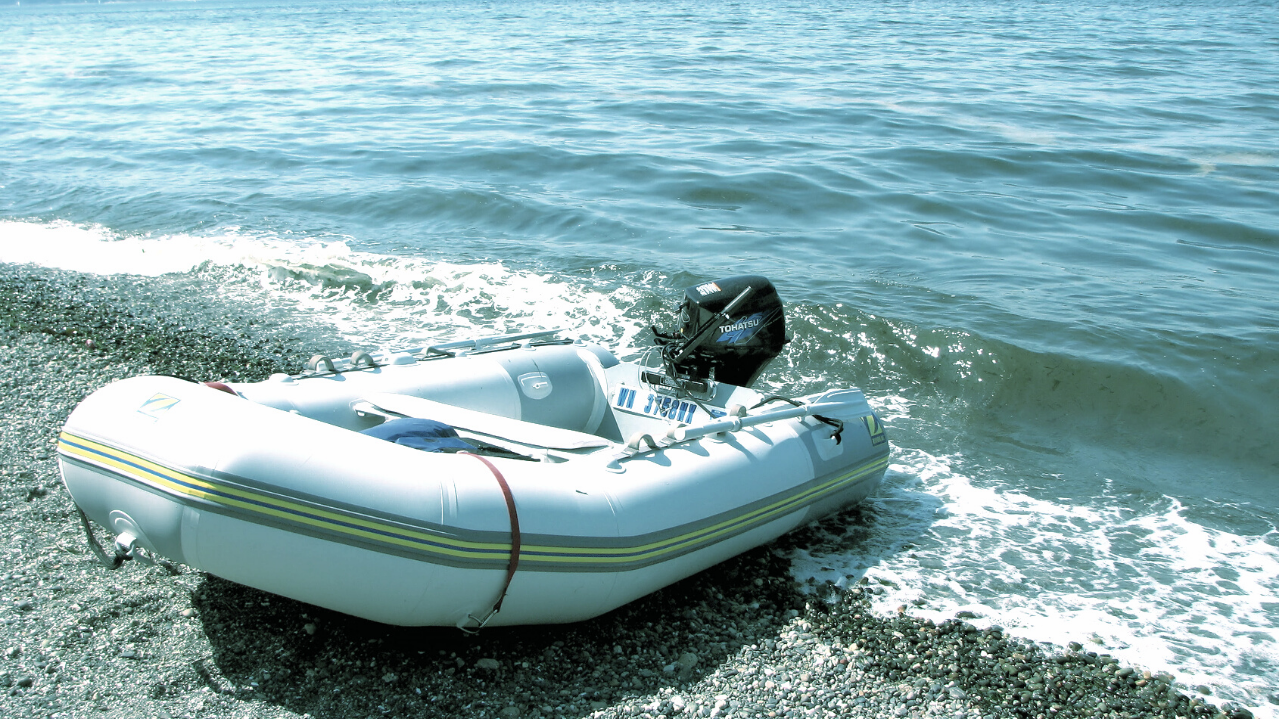
A ‘small boat’ is defined as one of a number of vessels used by individuals who cross the English Channel with the aim of gaining entry to the UK without permission to enter. The most common small vessels detected making these types of crossings are rigid-hulled inflatable boats (RHIBs), dinghies, and kayaks. Statistics on small boats include individuals who were detected on arrival in the UK and those detected in the Channel and subsequently brought ashore.
The data do not include those who arrive in the UK on larger vessels (e.g., yachts, motor cruisers, tugs, fishing vessels, ferries), those who arrive in the UK clandestinely on larger vessels not referenced above (including where hidden in a vehicle on a ferry), or individuals who arrive in the UK undetected. Nor do they include people who were prevented from departing France, or were intercepted by French authorities and returned to France.
This briefing also presents Home Office information on detected irregular entries other than by small boat. These statistics cannot be summed to infer the total number of people entering the UK without authorisation. This is because they refer only to detected irregular entries. Because small boat arrivals are more likely to be detected than other methods of irregular entry, statistics for different methods of entry cannot be directly compared. Moreover, changes in the number of irregular entrants detected could be a result of changes in operational activity or recording practices, and not only changes in the number of people attempting to enter the UK without authorisation.
How many people have crossed the Channel in small boats?
The number of small boat arrivals has increased substantially since 2018. While reports of people attempting to enter the UK by crossing the Channel go back over fifty years, significant numbers did not begin to be detected until late 2018.
From 2018 to 2025 inclusive, around 193,000 people were detected reaching the UK in small boats.
In 2025, around 41,500 people were detected crossing the Channel in small boats. That was 13% more than the year before, and the second-highest annual figure. In 2022, about 46,000 people crossed the Channel in this way.
Approximately 2,200 additional people crossed the Channel in the first two months of 2026, similar to previous years.
Figure 1

The majority of those arriving in small boats are men over the age of 18 – around 76% of 2025 arrivals for whom this information was recorded. A further 12% of arrivals that year were children under 18. These proportions have been relatively stable over time. One reason for the higher share of men is the danger associated with unauthorised migration. In many cases, female and minor children join later through family reunification routes.
Most people who cross the Channel in small boats claim asylum once they are in the UK. In 2025, 99% of all those crossing either applied for asylum or were named as a dependant (partner or child) on an application. For all arrivals between 2018 and 2025, the share was 95%.
Small boat arrivals made up 41% of all people applying for asylum in the UK in 2025, a similar share to the preceding four years. The total number of people claiming asylum in the UK has increased sharply since 2020, reaching 101,000 in 2025, close to the record level of 2024 (Figure 2). Only part of this growth is explained by people crossing the Channel by small boat. Data show that a large proportion of asylum seekers – 39% of those applying in 2025 – travelled to the UK legally on a work, study, visitor, or other visa.
Figure 2

Some people also enter the UK through other unauthorised means, such as in lorries or containers. The increase in small boat crossings means that overall unauthorised arrivals have risen, and that small boats have accounted for more than 80% of such detected arrivals in recent years (Figure 3; though note that a higher share of boat arrivals are detected compared to other irregular arrivals).
Figure 3

Where do people who arrive by small boat come from?
A small number of nationalities make up a large share of people crossing the Channel in small boats. From 2018 to 2025, nationals of six countries accounted for 65% of all arrivals – Iran (16%), Afghanistan (14%), Iraq (10%), Eritrea (10%), Albania (8%), and Syria (8%).
The most common nationalities have varied over time (Figure 4). A wide range of factors can shape these trends, including policy changes and developments in origin countries. Eritrea was the top country of origin for small boat arrivals in 2025, with more than twice as many arrivals than in 2024. Afghanistan was the top country of origin in 2023 and 2024 – and remained second in 2025 – though arrivals declined last year. The number of Syrian, Iraqi, and Vietnamese nationals who arrived by small boat also fell in 2025. In contrast, arrivals from Sudan, Somalia, and Ethiopia all increased significantly. In 2022, there was a very sharp but relatively short-lived rise in Albanian nationals crossing the Channel (for details, see Albanian asylum seekers in the UK and EU: a look at recent data).
Figure 4

How likely are small boat arrivals to be granted asylum?
Between 2018 and 2025, there were around 162,000 asylum applications from small boat arrivals to the UK (main applicants only). Around 20,000 of these applications, or 12% of the total, were still awaiting an initial decision at the end of 2025. Excluding withdrawals and administrative decisions, around 62% of all initial decisions on asylum applications from people who arrived by small boat – a total of 69,000 – were grants of protection. That was higher than the grant rate for asylum applications generally, which stood at 52% for the 2018–25 period.
Between 2018 and 2025, around 31,000 asylum applications from small boat arrivals were withdrawn or received an administrative decision, with around 16,000 of these outcomes in 2022 (see Understanding the Evidence). While some applications are withdrawn at the request of the applicant, most withdrawals are implicit – they happen if the applicant fails to meet certain conditions, such as attending an interview or responding to Home Office letters within a five-day deadline. A 2023 inspection of asylum casework raised concerns about the number of asylum applications withdrawn in recent years, highlighting a lack of adequate quality control processes. There is evidence that many people whose asylum applications were initially withdrawn by the government later re-entered the asylum system to have their claim processed (for more details, see The UK’s asylum backlog).
Figure 5

Almost a third of all small boat asylum applications that were withdrawn – around 10,000 – came from Albanian nationals, following a spike in arrivals in 2022 (Figure 6). Approximately 82% of all initial decisions on Albanian applications were withdrawals or administrative decisions. Between 2018 and 2025, only 41 applications from Albanians who arrived on small boats resulted in a grant of protection.
Some of the top nationalities among small boat arrivals have high asylum grant rates, such as Eritrean and Sudanese citizens. Others are much more likely to be refused, including Albanians, but also citizens of Iraq, Vietnam, Turkey, or India. As the UK’s overall grant rate has declined – from a record high of 76% in 2022 to 42% in 2025 – and conditions in countries of origin have changed, the grant rate for some top small boat nationalities has fallen significantly. This is most visible among Syrians, with those arriving in 2025 having an initial grant rate of 7%, down from 99% for those who arrived in 2022.
Figure 6

How many people who arrived by small boat have been removed from the UK?
Around 2,600 people who had first arrived in the UK by small boat were returned to another country in 2025. In total, there were 7,500 such returns between 2018 and 2025 – around 4% of all arrivals during this period.
It remains unclear how many of the 193,000 people who arrived by small boat between 2018 and 2025 are liable for removal, or are likely to become so in the future. By the end of 2025, around 48,000 small boat arrivals had been refused asylum at the initial decision stage, though some of these individuals will eventually be granted status on appeal and hence be able to remain in the UK. Another 33,000 had their asylum application withdrawn or administratively decided.
Most returns of small boat arrivals have been to Albania: 5,300 or 71% of the total. The government prioritised the processing of Albanian asylum applications after arrivals spiked in 2022, and overall removals to the country increased sharply after a returns agreement was signed the same year. However, around 13,000 Albanian nationals who arrived by small boat were either refused asylum or had their application withdrawn between 2018 and 2025, which suggests that the majority remain in the UK without authorisation.
In addition to the usual process of removing those who are refused asylum, in August 2025, the government began returning a small number of people who arrived by small boat to France under a pilot agreement. This allows the UK to return some people after arrival, without considering their asylum application, in exchange for receiving an equivalent number of migrants from France (see below for a discussion of its deterrent effects). There were 231 returns to France in 2025. That made up around 1% of all small boat arrivals between August and December.
Figure 7

How many people have died while trying to cross the Channel?
In 2025, there were 24 confirmed deaths related to Channel crossings, down from 73 the year before. A total of 162 people died in the Channel between 2018 and 2025. This rises to 257 when considering other deaths related to migration in the area, such as accidents involving people who try to board lorries bound for the UK. These figures may understate the true toll, as not all incidents are reported.
The number of deaths in the Channel has fluctuated substantially over time, and it is not fully clear what drives such changes. One factor that may play a role is the number of people in each boat, which grew from an average of 13 in 2020 to 62 in 2025. More people per boat reflects the use of larger boats, but may also indicate that some boats are used beyond their capacity, making accidents more likely. Another could be increased enforcement by the authorities and subsequent changes in strategy among smugglers. After beaches in Northern France became subject to more patrols, smugglers changed their points of departure and began using taxi boats (boats which depart from less surveilled waters with only pilots onboard and pick up their passengers directly from the water). Some journeys may have become longer and more dangerous as a result. Reports from 2022-23 indicated that small boats became more likely to depart from further along the coast, or even canals or rivers inland.
Figure 8

How did the small boat route across the Channel emerge?
Increased enforcement of other unauthorised modes of entry, such as lorries and trains, is likely to have contributed to the initial rise of the small boat route into the UK. After 2014, the British and French governments invested in enhanced security in and around French ports and the Eurotunnel. Measures included more perimeter fencing, additional CCTV, increased patrols, CO2 detectors, thermal imaging, and heartbeat monitors. Several organisations have argued these measures led to more people crossing in small boats – including the UK’s Independent Chief Inspector of Borders and Immigration, the UN Refugee Agency, and the Institute for Public Policy Research, a think tank.
Another contributing factor has been the expansion of smuggling operations across the Channel. Smuggling groups have become larger and increasingly professionalised in recent years, and were able to capitalise on their initial experience as enforcement measures were progressively tightened. There is some evidence that the price of crossing the Channel declined over time, although estimates are uncertain and can vary significantly. According to some sources, prices fell from around €14,000 in 2018 to well under €4,000 in 2024.
Why do people cross the Channel by small boat?
There is limited evidence on why Channel migrants decide to come to the UK. Several factors appear to play a role in their decision, such as the presence of friends and family members in the UK. The most common nationalities crossing the Channel have larger diaspora populations in the UK rather than in France. Other reasons include language and cultural links to the UK, perceptions of the UK as safe and welcoming, as well as negative experiences in other European countries.
Much debate has focused on whether UK policies affect the decisions of those seeking to cross the Channel. In general, academic research finds that small variations in policy between countries are not the most important factor influencing how many people claim asylum in destination countries. Global developments, such as conflict and instability in countries of origin, appear to be more important. Unauthorised migrants’ destination countries may also be influenced in some cases by the decisions of their smugglers.
Research on asylum seekers’ motivations finds that they have varying levels of knowledge about the policies that will face them when they arrive, or recent changes to such policies. Prospective migrants are generally aware of both the risks involved in an unauthorised journey – such as death, violence, or abuse – and the potential economic benefits of reaching their destination. However, limited information means that many underestimate risks and overestimate their chances of obtaining legal status.
One policy factor that may have influenced people’s decision to cross the Channel is that the UK is no longer part of the Dublin system. Before Brexit, this allowed for some asylum seekers to be returned to their EU country of first arrival, as well as information sharing on asylum applications made in other member states. In interviews, migrants in Northern France often cite the departure from Dublin as a reason for wanting to seek asylum in the UK, particularly if they had already been refused protection in the EU. However, it is unclear how big a role this played in their decision-making. In practice, few people were returned under Dublin when the UK was still a member – an average of 560 a year between 2008 and 2020.
Another argument – made by France’s previous Interior Minister, among others – has been that Britain’s liberal labour market regulations and lack of ID cards attract migrants. However, there is little evidence that the UK’s lack of an ID card system acts as a draw to migrants. As in France, British employers can be fined or imprisoned if they are found to have hired someone without permission to work and did not check their immigration status. In fact, data from the World Bank suggest that the informal economy – which includes many undeclared activities and is likely to rely on the employment of people without work authorisation – is smaller in the UK than in France, relative to the economy.
What measures have been proposed to reduce small boat arrivals?
Three main types of policies have been proposed to tackle small boat arrivals in the UK.
First is increased enforcement to disrupt smuggling networks, thereby restricting the ‘supply’ of smuggling services. The Labour government’s initial approach upon taking office – its promise to ‘smash the gangs’ – fell into this category. It has introduced several new policies: increased staffing, more cooperation with European police forces, new security agreements with countries such as Iraq and Serbia to tackle smuggling routes, and a new Border Security Command to coordinate investigations. The government has also pushed France and Germany to change their law to bolster enforcement efforts against smuggling gangs – allowing French police to intercept boats in shallow waters, and making smuggling into the UK illegal in Germany to make it easier to seize boats and equipment.
In addition, the Border Security, Asylum and Immigration Act became law in December 2025. This gives authorities expanded powers, such as the ability to search people and seize their belongings more easily.
There is some evidence that enforcement can have an impact on the number of people claiming asylum in some settings, although measures to reduce small boat crossings through such means also face challenges. Leaders of smuggling networks tend to operate outside Europe, in countries where there is little international law enforcement co-operation with the UK. When a smuggler is apprehended, they can typically be quickly replaced. There are limited costs involved in setting up a new smuggling operation, and few barriers to entry. Studies have highlighted that smuggling operations across the Channel are not driven by large gangs with centralised control and clear hierarchical structures. Instead, they operate as loose networks with localised operations that specialise in different aspects of the business, such as recruiting migrants or securing equipment. Because of the high demand for crossings, there are strong financial incentives for new actors to fill any gaps created by successful enforcement.
The second type of approach is deterrence – altering the incentives of migrants who want to reach the UK in order to reduce demand for crossings. This was a central focus of previous Conservative governments. Deterrence policies aimed to restrict the rights of asylum seekers after they arrive, such as the Illegal Migration Act 2023 (IMA), which prevented people who entered the UK without authorisation from being granted protection. Most notably, an agreement was signed with Rwanda to relocate asylum seekers there. However, this was delayed by legal challenges, and no asylum seekers were forcibly relocated to Rwanda by the time of the 2024 Election. The scheme was cancelled by Labour, and most provisions of the IMA have been repealed by the new Border Security Act.
However, the current government began implementing new measures aimed at deterrence in 2025. A new deal with France took effect in August 2025, which allows the UK to return some people who arrive by small boat, in exchange for accepting an equal number of migrants from France. As with the Rwanda scheme, the goal is to deter people from crossing the Channel in the first place. Around 200 people were returned to France between August and December, although the government has stated that the scheme remains a pilot and numbers will increase in the future. Returns remain a small share of all small boat arrivals, with 16,000 people making the crossing in the same period. The deterrent effect of this scheme (as with Rwanda) will likely depend on the number of asylum seekers who are eventually relocated – a significant deterrent effect may require a relatively large number of people arriving by small boat to be removed.
In November 2025, the government also announced significant reforms to the asylum system that aim to deter asylum seekers from coming to the UK. Instead of being placed on a direct path to permanent residence as before, recognised refugees will be given a temporary status that will have to be renewed every 30 months, and wait up to 30 years before being granted settlement if they arrived in the country without authorisation. The change will apply to people who applied for asylum on or after 2 March 2026. Other measures, including the implementation of previously announced changes to settlement rules, are scheduled for later in 2026.
Third and finally, civil society proposals have focused on providing ‘safe and legal routes’ for people to claim asylum in the UK, so they do not have to make dangerous crossings by boat. These include creating or expanding refugee resettlement programmes, expanding visa routes for refugees to join family members in the UK, providing additional humanitarian visas, or creating an option to apply for asylum from overseas. There is limited evidence that providing safe and legal routes has a large impact reducing the number of asylum seekers arriving without authorisation. For example, an analysis of US policies facilitating lawful border crossings between 2011 and 2023 found that the practice of allowing a limited number of legal arrivals explained only 9% of the monthly variation in illegal ones. In practice, it is likely that legal routes will reduce the use of unauthorised routes only if they allow a very large number of people to access them. For example, few Ukrainians have been detected crossing the Channel in small boats due to the uncapped visa scheme for this group, whereas Afghans, who have a limited resettlement scheme available to them, have been one of the most common nationalities making the crossing.
How many unauthorised arrivals by sea do other European states receive?
Greece, Italy, and Spain have all received large numbers of people arriving without authorisation by boat since 2014. While the UK recorded more unauthorised boat arrivals in 2025, numbers declined in other European countries, particularly Spain and Greece. However, Italy again recorded the most unauthorised arrivals, with around 66,000.
The number of boat arrivals in other countries has varied widely over time. Yet in recent years, they remained significantly lower than during the refugee crisis of the mid-2010s. Greece and Italy together received more than a million unauthorised sea arrivals in 2015 alone.
Unauthorised crossings in the Mediterranean have led to considerably more deaths than in the English Channel, although the latter route has become more dangerous over time. According to the IOM, around 32,000 died in the Mediterranean between 2014 and 2024. This compared to 332 people who died in and around the English Channel during the same period.
Figure 9

The UK receives fewer asylum applications than some other large European countries. In 2024, a record number of 108,000 people applied for asylum in the UK – compared to 251,000 in Germany, 159,000 in Italy, 166,000 in Spain, and 158,000 in France (for more details, see Asylum and refugee resettlement in the UK).
How did other European countries respond to unauthorised arrivals by sea?
In response to increases in irregular arrivals by sea, European governments introduced new measures to control migration. This included restrictions on the rights and eligibility of asylum seekers in Greece and Italy, as well as efforts by the Spanish and Italian governments to curtail search-and-rescue operations by humanitarian NGOs. Frontex, the EU’s shared border and coast guard agency, was also significantly expanded after 2015.
However, the main focus has been on reaching bilateral deals with key neighbours. This includes EU agreements with Turkey in 2016, Libya in 2017, Tunisia and Mauritania in 2023, Egypt in 2024, and Jordan in 2025. A formal agreement with Morocco was still being negotiated as of late 2025, after increased cooperation on migration since 2017.
These deals vary in scale and scope, though they have a similar principle at their core: the EU provides direct funding and other assistance – training and equipment for police forces, logistical support, expanded access to visas, or refugee resettlement programmes – while its neighbours promise to control the flow of migrants over the Mediterranean. Some of the measures implemented include crackdowns on smuggling gangs, expanded patrols, and pushbacks at sea by coast guards. Some of the EU’s agreements have been criticised by human rights organisations for contributing to abuse against migrants.
The EU’s bilateral deals may have had some impact in reducing unauthorised migration across the Mediterranean, though their precise effects are hard to measure. Arrivals in Italy, Greece, and Spain fell sharply from high levels after a series of new agreements were reached in 2015-16 and 2023-24. However, the number of people arriving by sea has fluctuated in recent years. For example, arrivals in Italy peaked in 2016, declined rapidly after the agreement with Libya was signed in 2017, then rose quickly between 2021 and 2023 – only to fall again in 2024 after another agreement was reached with Tunisia, where many of the previous routes from Libya had relocated. However, it is difficult to determine exactly how much of these declines was due to changes in policy, as opposed to other factors.
Acknowledgements
With thanks to CJ McKinney for assisting with a previous update.


